
Image
The global fuel shortage is affecting us all and the Australian Government has put in place the 4-level National Fuel Security Plan to ensure Australia’s fuel supply is robust and reliable.
Saving fuel where we can means we leave more for those who really need it, like farmers, truckies and essential services. Every litre saved will build a bigger buffer against future supply uncertainty. Even just a few voluntary actions from the tips below – as simple as emptying your boot or pumping up your tires – will help Australia to keep moving and stay safe.
 Simple actions you can take
Plan well
A simple idea that really works is to plan your trips and combine your errands into one trip. Lots of short trips uses more fuel.
Look after your vehicle's tyres
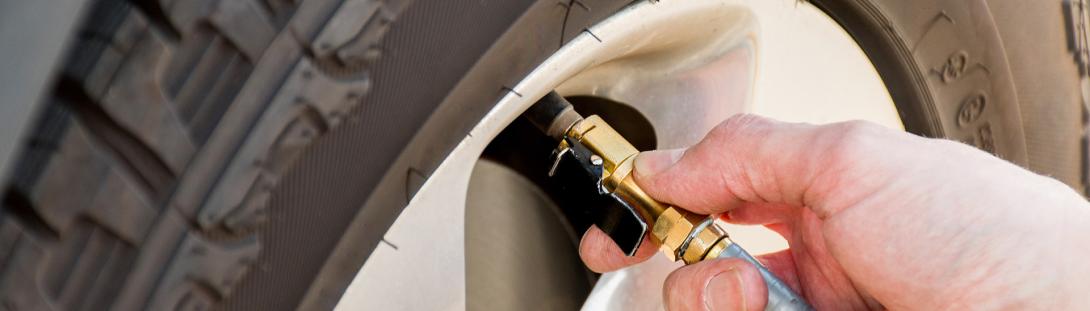
Looking after your tyres will not only reduce your fuel consumption by up to 5 per cent3,4 but also extend tyre life and improve handling. You should inflate your tyres to the highest pressure recommended by the vehicle manufacturer (usually located on the sticker inside the driver car door). Remember to keep your spare tyre inflated as well. If you are buying new ones, remember that tyres with a lower rolling resistance can also help reduce fuel consumption.
Travel light
The more a vehicle carries, the more fuel it uses. Minimising the cargo your vehicle carries can reduce your fuel consumption.
Minimise aerodynamic drag
You can reduce your fuel consumption by removing extra parts on the vehicle’s exterior (i.e. roof racks, spoilers) and only opening the window when necessary. Reducing drag and weight can improve fuel efficiency by up to 17 per cent5,6.
Use aircon and heating on low settings
Adjusting temperature levels in cars can make a difference to fuel consumption, so if you can travel in comfort at a slightly lower setting, do so.
Only fill up with the fuel you need
If you aren’t planning on driving much in coming days and weeks, consider whether you need a full tank of fuel, or if you can get by with what you have. Would you normally fill up the car if driving to the shops when you have three quarters of a tank?
Don’t overfill the fuel tank
Stop at the first click. Any more is lost in overflow and evaporation.
 Driver behaviour
Drive in high gear
Most engines run more efficiently at around 1,500 to 2,500 revolutions per minute (rpm). Change through the gears before your car reaches 2,500 rpm to run more efficiently. Automatic transmissions will shift up more quickly and smoothly if you ease back slightly on the accelerator once the car builds speed.
Monitor speed and acceleration
Unnecessary acceleration and driving at high speeds can increase fuel consumption and emissions. High speeds result in high fuel consumption. At 110 kilometres per hour (km/h) your car can use up to 25% more fuel than it would at 90 km/h. Minimising rapid acceleration and harsh braking by driving smoothly can reduce fuel consumption by 10-40 per cent in city driving and 15-30 per cent in highway driving1,2 . The use of cruise control on higher-speed roads will assist you to drive smoothly.
Minimise idling
Don’t leave your engine running while parked or waiting. Turn the engine off if you are waiting in your car for more than a minute, e.g. school pick up. If your car has a stop-start feature, use it. This can reduce fuel consumption by 1-2 litres for every hour the engine isn’t running when stopped7.
Monitor your fuel use
This is a great recommendation if you’re taking steps to reduce your fuel use. Start a travel log, reset your trip odometer and note the day/date of fuel purchase. Compare your savings over a week or month as you start to change your driving habits.
 Travel alternatives
Minimise your vehicle use
Planning your travel ahead could mean fewer trips and more efficient and cheaper travel than unplanned decisions made 'on the go'.
Some other considerations to minimise vehicle use include:
- if available, consider using alternative transport such as catching the bus, train, tram or ferry, which are often cheaper than driving. You could also walk or cycle depending on the distance and your ability
- go to shops nearest to you whenever possible to reduce the distances you travel by car. Walk or cycle to your local shops if you can
- avoid peak-hour traffic whenever possible
- is carpooling an option? Getting to a destination with a few friends nearby could be a great way to do your bit.
Note: Fuel saving estimates based on cited research. Real world results will vary based on a range of factors including driving style, weather and temperature conditions, and vehicle type and condition.
1 Thomas, J., S. Huff, B. West and P. Chambon. 2017. Fuel Consumption Sensitivity of Conventional and Hybrid Electric Light-Duty Gasoline Vehicles to Driving Style, SAE Int. J. Fuels Lubr. 10(3):2017, doi:10.4271/2017-01-9379
2 Oak Ridge National Laboratory. 2017. Sensible driving saves more gas than drivers think.
3 IEA (2005), Making Cars More Fuel Efficient, IEA, Paris. https://www.iea.org/reports/making-cars-more-fuel-efficient .
4 Patuleia A, Kadijk G, Verbeek M, Smokers R (2012).. Supporting Analysis regarding Test Procedure Flexibilities and Technology Deployment for Review of the Light Duty Vehicle CO2 Regulations
5 Oak Ridge National Laboratory. 2014. Fuel Economy and Emissions Effects of Low Tire Pressure, Open Windows, Roof Top and Hitch-Mounted Cargo, and Trailer (SAE 2014-01-1614). Study results are based on testing with a small sedan, a standard size SUV, a single roof-top cargo box (20" H x 40" W x 50" L), and a single rear-mount cargo tray. Cargo boxes with other dimensions or shapes may have a different effect on fuel economy.
6 Based on a fuel economy improvement of 0.33% per 1% reduction in weight as estimated by Ricardo Inc., Impact of Vehicle Weight Reduction on Fuel Economy for Various Vehicle Architectures, April 2008.
7 Argonne National Laboratory. 2015. Stop and Restart Effects on Modern Vehicle Starting System Components – Longevity and Economic Factors. https://publications.anl.gov/anlpubs/2015/05/115925.pdf. Estimates based on current Australian fuel prices.