Image
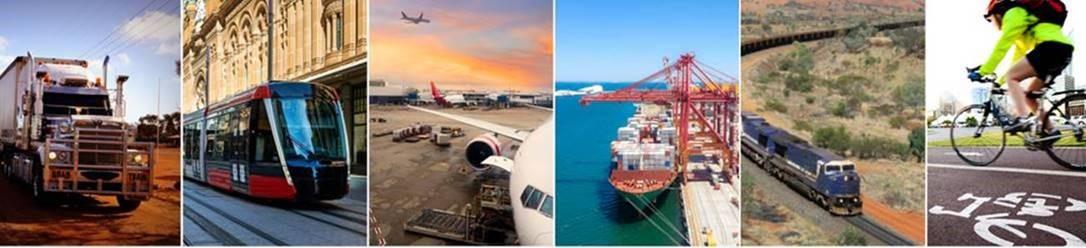
Australia's transport emissions
While the transport sector is critical to our economy, it is also the third largest source of Australia's greenhouse gas emissions, with direct emissions amounting to 22% of Australia's total emissions. With Australia's population and economy projected to grow, transport activity is also expected to increase to 2050. The challenge is to reduce emissions while the sector grows.
What is the Australian Government doing?
The Australian Government has an ambitious climate change agenda, committing to reduce national emissions by 43% on 2005 levels by 2030, 62–70% on 2005 levels by 2035 and net zero by 2050. This is in line with the global goal to keep warming to well below 2°C and efforts to keep it to 1.5°C.
The Net Zero Plan sets out and extends Australia's action on climate change. The Plan helps ensure Australia maximises the benefits of the global transition to net zero and provides long-term policy certainty to drive investment in low emissions and renewable technologies. To support the Plan, the government has developed 6 sector plans covering: electricity and energy; industry; resources; the built environment; agriculture and land; and transport and infrastructure.
Transport and Infrastructure Net Zero Roadmap and Action Plan
The Transport and Infrastructure Net Zero Roadmap and Action Plan is the sector plan for transport and transport infrastructure. It covers all transport modes and considers cross cutting issues including low carbon fuels, freight and supply chains, system wide efficiencies and transport infrastructure. It sets out how the uptake of cleaner cars, active and public transport, and solutions for aviation, maritime, rail and roads will transform the sector. This will deliver emissions reductions, consumer savings and increased fuel security, and support the government's goal of achieving net zero by 2050.
There are 5 priority actions that will ensure the transport sector makes its full contribution to Australia's emissions reduction goals. Achieving a net zero transport and transport infrastructure sector will require sustained effort and action from industry, all levels of government, the private sector and communities across these five actions:
- Invest in enabling low and zero emissions transport infrastructure.
- Electrify and increase transport's energy performance.
- Switch to low carbon alternatives (LCLFs) to power transport where electrification is not feasible.
- Innovate to expand cost competitive transport technology options.
- Scale up efforts to reduce embodied emissions in transport infrastructure.
The decarbonisation of Australia's transport system will require significant public and private sector investment in emerging low and zero emissions technology and enabling infrastructure. The Australian Government will closely collaborate with industry, community and all levels of government to reach net zero by 2050. The Australian Government will also continue to work closely with international partners to advance action on climate change through the International Maritime Organization and International Civil Aviation Organisation.
Work underway to date
Building on the Australian Government’s Net Zero Plan and commitments, the Department of Infrastructure, Transport, Regional Development, Communications, Sport and the Arts is taking action. Work underway to support transport and transport infrastructure decarbonisation pathways include:
- Working in partnership with the Department of Climate Change, Energy, the Environment and Water to release the Securing Australia's Cleaner Fuels Industry: Consultation paper on a demand mechanism. Feedback received through this consultation, which closed on 15 September 2026, will help inform future government decisions on the design and implementation of any mechanism.
- Committing $1.1 billion in the Cleaner Fuels Program to encourage domestic production of low carbon liquid fuels, while strengthening fuel security and supporting new jobs in the net zero economy. The Program will offer production-linked grants to domestic producers over 10 years. The grants are being delivered by the Australian Renewable Energy Agency (ARENA).
- Establishing the Low Carbon Liquid Fuels Knowledge Hub to give Australians, industry and communities a single place to access evidence-based information, data and practical resources on these fuel types.
- Supporting low carbon liquid fuels through the Future Made in Australia Innovation Fund, investment for the Sustainable Aviation Fuel Funding Initiative, and expanding the Guarantee of Origin scheme to incorporate low carbon liquid fuels and create a robust certification system for an Australian low carbon liquid fuels market.
- Increasing the uptake of electric vehicles and introducing the New Vehicle Efficiency Standard through the National Electric Vehicle Strategy.
- Convening the Australian Jet Zero Council to work with the aviation industry to ensure a strong and sustainable aviation sector that supports emissions reduction targets, while growing jobs and innovation.
- Launching the Maritime Emissions Reduction National Action Plan (MERNAP) to chart a practical net-zero course for the domestic maritime sector.
- Preparing a green fuel bunkering strategy to help guide Australian ports to diversify the maritime fuel mix, supported by targeted industry trials and studies.
- Supporting zero emissions travel through the Active Transport Fund.
- Incentivising more freight to move by fuel-efficient modes such as rail and coastal shipping through the Transport Resilience and Capacity Kickstart (TRACK) scheme.
- Embedding sustainability as a key strategic theme in the Infrastructure Policy Statement.
- Working with states and territories to reduce transport and transport infrastructure emissions through the Infrastructure and Transport Ministers' Meeting.
- Engaging with international partners to reduce shipping and aviation emissions.